Chemiluminescence immunoassay is becoming a preferred technology in clinical diagnostics because it combines sensitive quantitative detection with fast turnaround, broad assay menus, and automated laboratory workflows. Modern CLIA platforms can reduce manual processing, support random-access testing, and accommodate laboratories ranging from small decentralized facilities to high-throughput central laboratories.
The practical value of CLIA does not depend on sensitivity alone. Laboratories increasingly need testing systems that match their sample volume, STAT requirements, available space, staffing level, and future menu expansion. Hotgen addresses these different requirements through mono-test benchtop systems and fully automated analyzers with throughput ranging from 24 to 200 tests per hour.
How Does Chemiluminescence Immunoassay Work?
Chemiluminescence immunoassay combines antigen-antibody recognition with a light-producing chemical reaction. After the target analyte binds to the corresponding antibody or antigen, the analyzer measures the emitted light and converts the signal into a quantitative concentration.
Magnetic particles are commonly used to capture the target and separate bound components from unbound substances. This combination supports high analytical sensitivity, a broad measuring range, and automated washing and reaction processes.
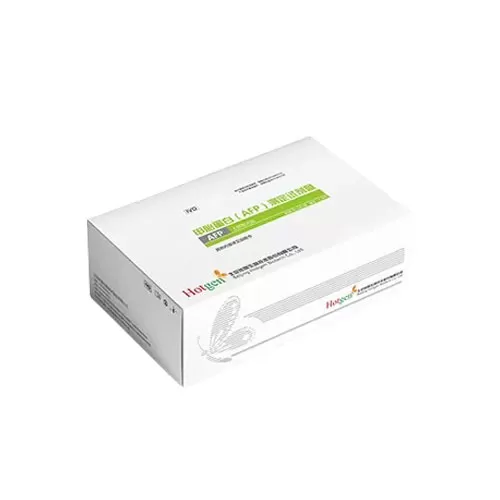
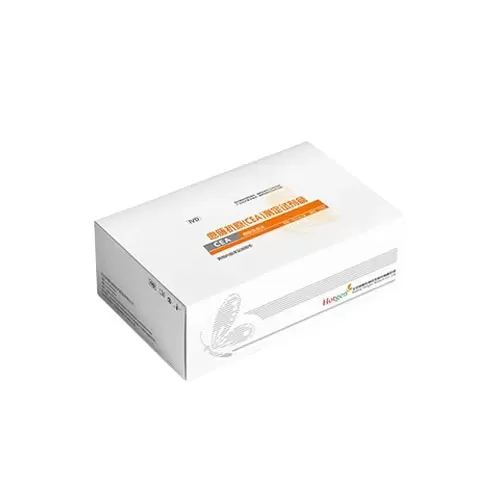
Hotgen’s chemiluminescence immunoassay products cover more than 130 parameters across clinical areas including cardiovascular disease, inflammation, thyroid function, reproductive hormones, diabetes, oncology, liver disease, and other diagnostic applications.
Why Are Laboratories Moving from Manual Immunoassays to CLIA?
Manual and batch-based immunoassays can remain suitable for selected applications, but they often require more pipetting, incubation management, plate washing, and operator involvement.
A modern CLIA immunoassay analyzer can automate sample aspiration, reagent addition, incubation, magnetic separation, signal detection, result calculation, and data transmission. This reduces repetitive manual operations and helps standardize processing between operators and work shifts.
For busy laboratories, the main operational advantages include:
Reduced hands-on testing time
Random-access processing of different assays
Priority handling of urgent samples
More predictable turnaround times
Better sample and reagent traceability
Easier connection with LIS or HIS platforms
The resulting efficiency is especially valuable when laboratories must process routine tests and urgent requests on the same system.
Which Hotgen CLIA Analyzer Fits Different Laboratory Workloads?
Hotgen offers several CLIA configurations rather than applying one platform to every laboratory. The following specifications are based on the company's currently published product information.
| Model | Analyzer type | Throughput | Testing mode | Channels | First result | Supported sample types |
|---|
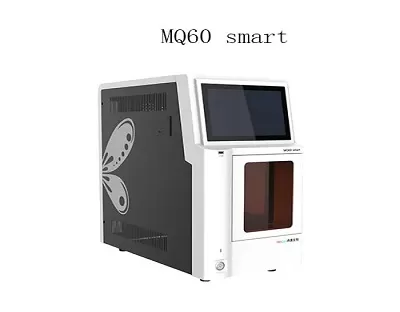
| MQ60 Smart | Fully automated benchtop mono-test CLIA | 24 tests/hour | Batch mode, unit-dose testing | 6 | 17 minutes | Serum, plasma, whole blood, urine |
| MQ60 ProB | Fully automated benchtop mono-test CLIA | 48 tests/hour | Batch and STAT modes | 12 | 17 minutes | Serum, plasma, whole blood, urine |
| C800 | Fully automated CLIA | 150 tests/hour | Random-access testing | 12 reagent positions | 17 minutes | Serum, plasma, urine |
| C2100 | Fully automated whole-blood CLIA | 200 tests/hour | True random access with STAT priority | 15 reagent positions | 12 minutes | Serum, plasma, whole blood, urine |
MQ60 Series for Flexible On-Demand Testing
The MQ60 series uses individually packaged, unit-dose mono-test reagent cards. Laboratories can run individual assays or small batches according to actual demand instead of opening large multi-test reagent packs.
This format can be useful for lower-volume laboratories, emergency departments, specialty testing, satellite laboratories, and facilities with an unpredictable assay mix. The MQ60 Smart provides six testing channels and a compact 10.1-inch touchscreen, while the MQ60 ProB increases capacity to 12 channels and supports STAT operation. Both systems provide LIS/HIS connectivity and built-in result storage.
C800 for Compact Laboratory Automation
The C800 is designed for laboratories that need a fully automated chemiluminescence analyzer without using excessive bench space.
It delivers up to 150 tests per hour, provides 30 sample positions and 12 reagent positions, and reports the first result in approximately 17 minutes. Its footprint is about 0.4 square meters, making it relevant for medium-volume hospital and independent laboratories that need continuous random-access testing.
C2100 for Whole-Blood and High-Throughput Testing
The C2100 automatic chemiluminescence immunoassay analyzer increases throughput to 200 tests per hour and provides 50 sample positions and 15 refrigerated reagent positions.
Its whole-blood capability is particularly relevant to cardiac and inflammatory marker testing. Compatible EDTA whole-blood samples can be processed without conventional serum or plasma separation for supported assays, helping reduce pre-analytical steps in time-sensitive workflows.
The C2100 also supports automatic tube decapping, sample mixing, STAT priority, LIS connectivity, automatic dilution, and a first result in approximately 12 minutes.
Is CLIA Better Than ELISA for Laboratory Testing?
CLIA is generally better suited to laboratories requiring automation, individual sample processing, shorter turnaround times, and higher routine throughput. ELISA can remain practical for batch-based testing, research applications, and laboratories with lower automation requirements.
The choice should therefore be based on workflow rather than technology labels alone. Laboratories should compare daily sample volume, assay availability, reagent stability, calibration requirements, staff workload, maintenance, and total cost per reportable result.
A broad chemiluminescence immunoassay kit menu may also allow more parameters to be consolidated on compatible platforms, simplifying training, inventory management, and quality-control procedures.
What Should Laboratories Consider When Selecting a CLIA System?
The highest-throughput analyzer is not automatically the best option. A laboratory should select a platform according to peak sample volume, STAT demand, required parameters, sample types, available space, reagent consumption, and expected growth.
Smaller facilities may benefit more from flexible mono-test systems that reduce reagent waste. Medium-volume laboratories may prioritize compact automation, while central laboratories may require whole-blood compatibility, larger sample capacity, shorter first-result times, and scalable system connectivity.
Chemiluminescence immunoassay is becoming central to clinical diagnostics because it combines analytical performance with practical workflow improvement. Hotgen’s product portfolio offers laboratories a choice between flexible on-demand testing and fully automated, high-throughput processing, enabling each facility to build a CLIA workflow tailored to its specific clinical and operational requirements.
Frequently Asked Questions
What is the difference between CLIA and ELISA?
CLIA generally provides higher automation, faster individual sample processing, and greater suitability for random-access testing. ELISA remains practical for batch testing and selected research applications. The appropriate method depends on sample volume, turnaround-time requirements, assay availability, laboratory staffing, and budget.
How should a laboratory choose the right CLIA analyzer?
Laboratories should compare daily and peak testing volumes, required assay parameters, sample types, STAT testing demand, throughput, time to first result, reagent capacity, available space, LIS connectivity, maintenance requirements, and local technical support rather than selecting an analyzer based only on maximum throughput.
Can chemiluminescence immunoassay test whole-blood samples?
Whole-blood compatibility depends on the analyzer and the specific assay. Hotgen’s C2100 supports whole-blood testing for compatible parameters, helping reduce certain pre-analytical processing steps. Laboratories should confirm validated sample types for every reagent before introducing a test into routine clinical use.
What are the advantages of mono-test CLIA reagents?
Mono-test reagents allow laboratories to load individual assays according to actual demand. This can reduce unused reagent, support low-frequency or emergency parameters, and provide greater testing flexibility for smaller laboratories, specialty departments, and facilities with variable daily sample volumes.
 English
 français
 Deutsch
 Español
 ไทย
ไทย русский
 português
 العربية
 Indonesia