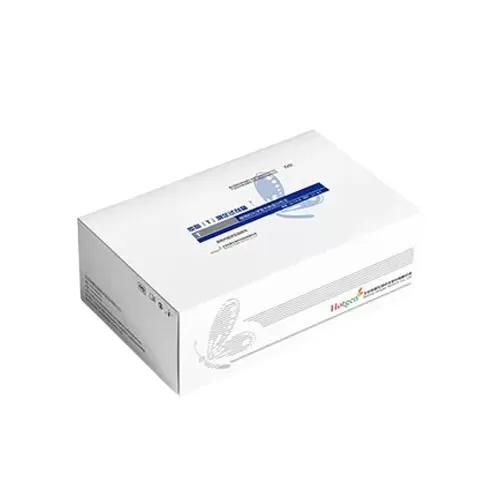
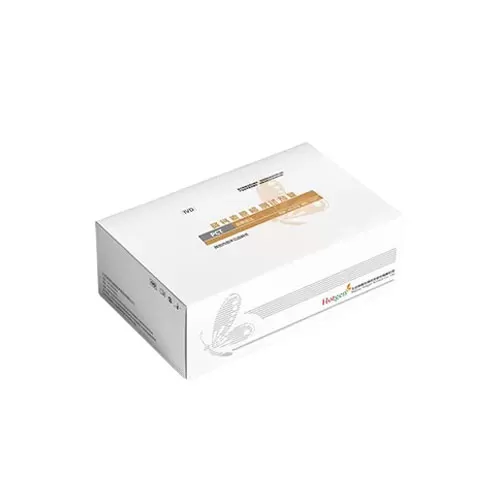
Across Hotgen’s July 2026 exhibition program—from WHX Labs Bangkok 2026 to the upcoming ADLM 2026—laboratory professionals can explore practical immunoassay solutions for different workloads and operating models. The showcase covers compact mono-test chemiluminescence, fully automated systems, point-of-care diagnostics, broad reagent menus, and cooperation opportunities for global distributors and diagnostic brands.
The two events serve complementary markets. WHX Labs Bangkok connects laboratory professionals, healthcare providers, distributors, and decision-makers across Southeast Asia. ADLM combines an international scientific meeting with a major Clinical Lab Expo in Anaheim. Hotgen’s exhibition program addresses one central question: how can an IVD manufacturer support routine, urgent, decentralized, and higher-volume testing without forcing every laboratory into the same system configuration?
When and Where Are WHX Labs Bangkok 2026 and ADLM 2026?
WHX Labs Bangkok 2026 was held from July 8 to 10 at the Queen Sirikit National Convention Center in Bangkok, Thailand. The event brought together medical laboratory technologies, diagnostic products, healthcare equipment, and regional business cooperation within the Southeast Asian healthcare market.
ADLM 2026 runs from July 26 to 30 at the Anaheim Convention Center in California, with the Clinical Lab Expo open from July 28 to 30. The expo features more than 700 exhibitors across over 200 product categories, allowing laboratory professionals to compare assays, instruments, automation systems, workflow technologies, and laboratory services.
Together, these events enable Hotgen to engage with laboratories and distributors seeking adaptable solutions for growing Asian markets, as well as international laboratory medicine professionals evaluating clinically relevant innovation, scalable automation, and dependable diagnostic supply.
Which Immunoassay Solutions Will Hotgen Highlight?
Chemiluminescence is a central part of the Hotgen showcase. Instead of offering one analyzer for every laboratory environment, Hotgen provides configurations for lower, medium, and higher testing volumes.
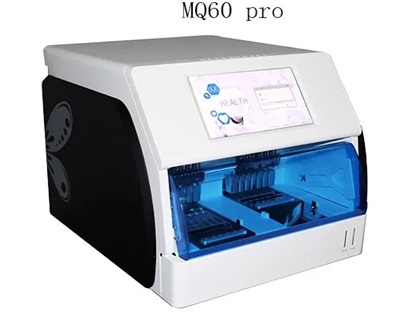
The MQ60 Smart supports laboratories that require accurate testing with greater operational flexibility. Its mono-test reagent format allows individual assays to be loaded according to actual testing demand, helping reduce reagent waste when sample volumes are variable or unpredictable. Visitors evaluating a compact chemiluminescence immunoassay analyzer can discuss its suitability for community hospitals, specialty laboratories, emergency departments, and decentralized testing sites.
For laboratories requiring greater automation, the C800 and C2100 extend the portfolio into routine and higher-volume workflows. The compact C800 is designed to improve automation while limiting laboratory space requirements. The C2100 combines higher throughput with whole-blood compatibility, random access, STAT priority, and automated sample handling. Laboratories can therefore select a platform that meets current demand while maintaining a practical route for future expansion.
How Can a Broad Reagent Menu Improve Laboratory Efficiency?
Analyzer performance is only one part of an effective clinical diagnostic system. Laboratories also require clinically relevant assays, reliable reagent supply, and packaging formats suited to their daily operations.
Hotgen’s chemiluminescence immunoassay kit portfolio covers cardiac markers, inflammation, thyroid function, tumor markers, diabetes, renal function, liver disease, hormones, anemia, and other clinical applications. A broad menu can help laboratories consolidate more tests on compatible platforms instead of maintaining several disconnected systems.
Visitors to a clinical diagnostics exhibition should assess more than the number of available parameters. Sample compatibility, time to first result, calibration procedures, reagent stability, quality-control requirements, inventory management, and STAT handling may have a greater effect on daily laboratory productivity than headline throughput alone.
These considerations are especially important when laboratories are comparing systems with similar analytical specifications. An analyzer must fit the laboratory’s actual sample profile, staffing model, testing schedule, and turnaround-time targets.
What Will Hotgen Present for Point-of-Care Testing?
Point-of-care testing is expanding beyond traditional emergency applications. Hospitals, community clinics, public health facilities, and mobile testing programs increasingly need rapid results closer to the patient.
Hotgen’s UPT2800 Up-Converting Phosphor Technology analyzer supports rapid quantitative testing with low background interference, stable signal performance, and a compact format suitable for decentralized diagnostic settings. Its compact format is relevant in settings where simplified operation, portable workflows, and faster clinical decisions are important.
For healthcare systems with geographically distributed facilities and different infrastructure levels, POCT can improve access to timely diagnostic information. Laboratory professionals attending ADLM 2026 can also examine how decentralized testing complements central laboratory automation while maintaining standardized workflows, quality management, and traceable results.
The goal is not to replace the central laboratory. It is to place the appropriate testing capability at the most effective point in the patient pathway.
Why Does Single-Test Chemiluminescence Matter?
Large reagent packs can be efficient in high-volume laboratories but may create waste when testing demand is low or unpredictable. Single-test chemiluminescence packages each reaction individually, enabling laboratories to run assays according to actual demand.
This model is valuable for specialty tests, emergency requests, low-frequency parameters, and laboratories seeking to widen their test menu without opening large multi-test reagent packs. It can also reduce the operational pressure created by onboard stability limits and uneven assay utilization.
Its main benefit is workload alignment. Reagent consumption can more closely follow patient demand while automated processing and quantitative chemiluminescence performance are retained.
What Should Distributors and Diagnostic Companies Discuss with Hotgen?
A clinical diagnostics exhibition is also an opportunity to evaluate Hotgen beyond individual instruments. Companies comparing IVD manufacturers should consider technology depth, manufacturing capacity, reagent development capabilities, quality systems, registration support, technical training, and long-term product planning.
Hotgen’s portfolio includes CLIA platforms, POCT systems, rapid tests, molecular diagnostic products, ELISA solutions, and IVD raw materials. This range can support distributors expanding their diagnostic portfolios and companies exploring OEM, private-label, or localized cooperation.
The discussion should begin with product-market fit. A private laboratory may prioritize compact instruments and flexible menus, while a hospital network may focus on throughput, connectivity, service response, and standardized operation across multiple locations.
Commercial partners may also need regulatory documentation, customized branding, reagent supply planning, technical transfer, distributor training, or regional market support. Evaluating these capabilities early helps determine whether a potential supplier can support sustainable market development rather than only an initial product purchase.
What Can Visitors Gain from Meeting Hotgen?
Laboratory managers can bring current test volumes, target parameters, turnaround-time requirements, sample types, and space limitations. Distributors can discuss market size, registration pathways, service coverage, competitor positioning, and expected annual demand.
These details allow the Hotgen team to recommend a more suitable combination of analyzer, reagent menu, automation level, and commercial support. Visitors can compare solutions for lower-volume testing, high-throughput routine diagnostics, urgent assays, and decentralized care within one product portfolio.
WHX Labs Bangkok 2026 and ADLM 2026 provide valuable opportunities to examine how Hotgen connects precision, efficiency, flexibility, and scalable cooperation. For laboratories, the goal is to improve daily diagnostic operations. For distributors and diagnostic companies, the goal is to build a sustainable portfolio with an experienced IVD manufacturer and an expanding range of immunoassay solutions.
Frequently Asked Questions
What diagnostic solutions is Hotgen presenting across the two exhibitions?
Hotgen’s exhibition portfolio includes chemiluminescence analyzers for different testing volumes, matching CLIA reagent menus, point-of-care technologies, and cooperation options for laboratories, distributors, and diagnostic companies.
Who should meet Hotgen at WHX Labs Bangkok 2026 or ADLM 2026?
Laboratory managers, clinical chemists, hospital procurement teams, IVD distributors, diagnostic brands, and healthcare investors can evaluate workflow suitability, regulatory requirements, product positioning, and potential commercial cooperation.
How should a laboratory choose between mono-test and high-throughput CLIA systems?
The decision depends on sample volume, test-menu diversity, urgent testing needs, reagent utilization, available space, and automation requirements. Mono-test systems support flexible lower-volume testing, while high-throughput platforms are better suited to centralized and predictable workloads.
Can Hotgen support international distribution or OEM cooperation?
Hotgen works with international partners on product supply and commercial cooperation. Requirements involving OEM services, registration, branding, technical training, reagent supply, and after-sales support should be discussed directly with the exhibition team.
 English
 français
 Deutsch
 Español
 ไทย
ไทย русский
 português
 العربية
 Indonesia