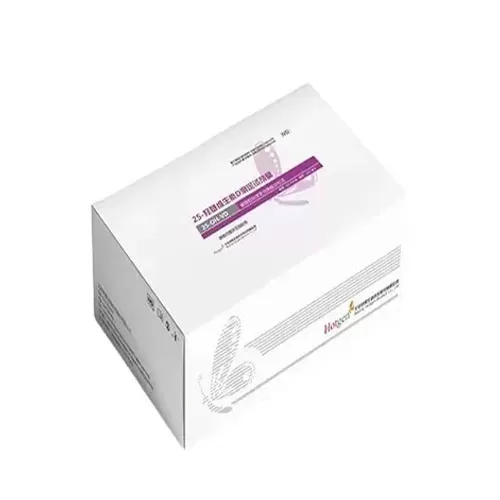
Hotgen POCT solutions improve laboratory efficiency by moving quantitative testing closer to the patient, reducing sample transportation and analyzer queues, and delivering results quickly enough to support time-sensitive clinical decisions. The platform combines compact instrumentation, UPT-based lateral-flow immunoassays, digital result storage, and LIS/HIS connectivity, allowing laboratories to extend testing capacity beyond the central laboratory.
For hospitals, emergency departments, outpatient clinics, and decentralized testing facilities, the advantage is not simply faster analysis. Point-of-care testing creates a shorter pathway from sample collection to an actionable result. It can eliminate several delays associated with transportation, accessioning, batching, sample preparation, and manual result transmission, provided that operator training and quality management are properly controlled.
How Does Point-of-Care Testing Reduce Laboratory Turnaround Time?
Traditional laboratory testing often requires a specimen to be transported to a central facility, registered, prepared, placed in an analyzer queue, processed, reviewed, and reported back to the clinical department.
Point-of-care testing performs analysis at or near the location where care is delivered. By removing transportation and reducing workflow handoffs, POCT can shorten the time between sample collection and clinical action. This is particularly valuable in emergency medicine, outpatient care, community healthcare, and facilities with limited access to centralized testing.
Hotgen’s platform follows a streamlined operating process:
Add the sample
Incubate at room temperature
Start instrument detection
Obtain and print the quantitative result
This standardized workflow can reduce hands-on complexity while avoiding the subjectivity associated with visually interpreted rapid tests. Hotgen’s UPT technology uses infrared excitation and up-converting phosphor particles to enhance signal-to-noise performance and testing stability.
For laboratory managers, decentralized testing can also prevent urgent samples from competing with routine workloads on central analyzers. The central laboratory remains responsible for governance and quality oversight, while appropriate departments gain faster access to selected diagnostic parameters.
What Makes the UPT2800 Suitable for Rapid Diagnostics?
The Hotgen UPT2800 is a compact quantitative immunoassay analyzer designed for medical institutions and other rapid-testing applications. It uses an up-converting phosphor technology-based lateral-flow assay rather than relying on visual line interpretation.
Published UPT2800 Product Parameters
| Parameter | UPT2800 specification |
|---|
| Assay method | UPT-based lateral-flow assay |
| Result type | Quantitative |
| Detection speed | Result reading in 20 seconds |
| Display | 8-inch touchscreen |
| Languages | English, German and Chinese |
| Result storage | 10,000 test results |
| Printer | Internal thermal printer |
| Data connectivity | LIS/HIS connection |
| Dimensions | 355 × 315 × 270 mm |
| Weight | 5.6 kg |
| Power supply | AC 100–240 V, 50–60 Hz |
These specifications make the UPT analyzer relevant to laboratories that need a small instrument with quantitative reporting and basic data-management capabilities. Its compact footprint can support emergency rooms, outpatient departments, smaller laboratories, mobile testing programs, and regional healthcare facilities where installing a large automated system may not be practical.
The published 20-second detection speed refers to instrument reading rather than the entire sample-to-result time. Total turnaround time also includes sample preparation and assay incubation, which vary according to the individual test procedure.
How Does UPT Improve the Reliability of Rapid Immunoassays?
Conventional fluorescence assays use higher-energy light to excite fluorescent labels. This can create background interference from biological samples or testing materials.
UPT uses the anti-Stokes effect: inorganic rare-earth particles absorb lower-energy infrared light and emit higher-energy visible light. Because biological materials generally do not produce the same up-converted signal, background interference can be reduced, and the signal-to-noise ratio improved. Hotgen also states that inorganic up-converting phosphor particles offer greater environmental stability than organic fluorescent materials.
This matters operationally because rapid diagnostics must balance speed with analytical consistency. A fast result provides limited value when weak signals, visual interpretation, or unstable labels create unnecessary repeat testing.
Instrument-based quantitative detection can provide:
Standardized result interpretation
Reduced dependence on operator eyesight
Stored patient and test records
Printable results
Better integration with laboratory information systems
More consistent comparison of serial measurements
These features help POCT become part of a managed laboratory network rather than functioning as an isolated rapid-testing activity.
Which Tests Can Be Consolidated on Hotgen’s POCT Platform?
Hotgen’s UPT kit portfolio covers multiple clinical areas, including cardiac biomarkers, inflammation, liver disease, diabetes, sex hormones, preterm-birth prediction, renal injury, rheumatoid arthritis, bone metabolism, and selected infectious-disease applications.
Cardiac parameters include cTnI, hs-cTnT, CK-MB, MYO, H-FABP, NT-proBNP, D-dimer, Lp-PLA2, and combined panels such as cTnI/CK-MB/MYO and cTnI/NT-proBNP. Depending on the assay, supported specimens can include serum, plasma, or whole blood.
A broad menu can improve laboratory efficiency in several ways. Staff can use a common analyzer workflow for different clinical departments, training requirements can be reduced, and test records can be managed through one instrument platform.
It also enables laboratories to place selected tests according to clinical urgency. Cardiac and inflammatory biomarkers may be positioned near emergency or critical-care workflows, while a bone metabolism test or other specialized parameter can be introduced where demand does not justify a large central analyzer.
Exact parameters, specimen types, intended uses, and regulatory availability should always be confirmed for the target country and individual assay.
Does POCT Replace the Central Laboratory?
POCT should complement rather than replace the central laboratory.
Central laboratories remain essential for high-throughput testing, complex analyses, confirmatory methods, quality assurance, and specialist interpretation. POCT is most effective when it is used for carefully selected tests where faster availability can meaningfully influence the patient pathway.
A coordinated model may use POCT for urgent and decentralized testing while routing routine, specialist, or confirmatory samples to the main laboratory. This reduces unnecessary workload transfer while preserving centralized oversight.
How Can Laboratories Implement POCT Without Sacrificing Quality?
Rapid testing only improves efficiency when the complete POCT program is controlled. Laboratories should establish clear responsibilities for operator certification, internal quality control, external quality assessment, reagent storage, instrument maintenance, result review, and connectivity.
Important implementation criteria include:
Clinical justification for each test
Defined operator permissions and training
Patient and sample identification controls
Quality-control schedules
Maintenance and calibration procedures
Reference ranges and critical-result policies
LIS/HIS connectivity
Procedures for unexpected or inconsistent results
Laboratory professionals should remain involved in POCT selection and governance, even when testing is performed by nurses, physicians, or other trained healthcare staff. Reliable POCT depends on collaboration between laboratory teams and clinical departments.
Frequently Asked Questions
What is the main difference between POCT and central laboratory testing?
POCT is performed at or near the patient-care location, reducing sample transportation and processing delays. Central laboratories generally provide broader menus, higher throughput, and more complex testing. The two models work best as complementary parts of an integrated diagnostic workflow.
How quickly does the Hotgen UPT2800 provide a result?
The detection speed of the UPT2800 is 20 seconds. Total sample-to-result time depends on the preparation and incubation requirements of the individual assay and should be confirmed in the relevant instructions for use.
Does the UPT2800 provide quantitative results?
Yes. The UPT2800 is designed for quantitative UPT-based lateral-flow immunoassays. It also includes an internal thermal printer, stores up to 10,000 results, and supports LIS/HIS connectivity.
What should laboratories consider before selecting a POCT analyzer?
Laboratories should assess the required test menu, specimen types, total turnaround time, operator workload, quality-control needs, connectivity, storage conditions, regulatory status, technical support, and cost per reportable result—not only instrument reading speed.
Hotgen’s POCT solutions improve laboratory efficiency by combining rapid quantitative detection with a compact analyzer, versatile assay applications, and digital data management. When integrated under laboratory oversight, the UPT platform can reduce workflow delays, support decentralized care, and give clinicians faster access to diagnostic information without separating POCT from the broader quality-management system.
 English
 français
 Deutsch
 Español
 ไทย
ไทย русский
 português
 العربية
 Indonesia