Respiratory infection seasons can place significant pressure on hospitals. Emergency departments receive more patients with fever, cough, sore throat, fatigue, and other overlapping symptoms, while laboratories must process a larger number of specimens within limited time and staffing capacity. The key challenge is not simply performing more tests, but selecting the right testing method for different patients and clinical settings.
A practical respiratory infection testing strategy should balance turnaround time, pathogen coverage, testing capacity, laboratory resources, and the clinical purpose of testing. Hospitals may therefore need a combination of rapid screening and laboratory-based diagnostic methods rather than relying on one test for every patient.
Why Is Respiratory Infection Testing Important During Peak Seasons?
Many respiratory infections produce similar early symptoms. Influenza A, influenza B, and other respiratory pathogens may all present with fever, cough, fatigue, muscle aches, or upper respiratory symptoms.
This makes symptom-based differentiation difficult, particularly when several pathogens circulate at the same time.
For hospitals, timely testing can support:
patient triage;
infection-control decisions;
selection of further laboratory investigations;
more efficient use of diagnostic resources;
faster clinical decision-making.
Hospitals developing broader infectious disease diagnostics workflows should therefore consider respiratory testing as part of an integrated infectious-disease diagnostic pathway.
What Types of Respiratory Infection Tests Can Hospitals Use?
The appropriate method depends on the clinical question, expected pathogen, required turnaround time, and available laboratory infrastructure.
Rapid Antigen Tests
Rapid antigen tests are commonly used when speed and operational simplicity are priorities.
They may be suitable for:
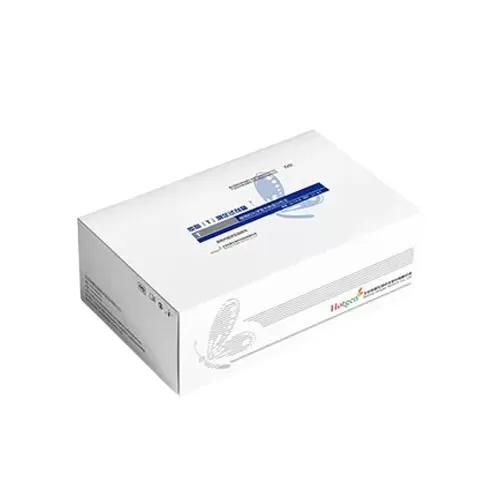
For influenza-related testing, Hotgen provides a flu A & B test kit designed for the detection of influenza A and B.
The benefit of rapid antigen testing is mainly operational. Hospitals can obtain useful initial screening information without sending every specimen into a more complex molecular workflow.
Molecular Testing
Molecular testing detects pathogen nucleic acids and can provide greater analytical depth when more detailed investigation is required.
It may be appropriate when:
a rapid result does not explain the clinical presentation;
the patient belongs to a high-risk population;
several pathogens need to be differentiated;
additional confirmation is required;
a hospital is investigating an outbreak.
Rather than treating rapid and molecular testing as competing technologies, hospitals can use them at different stages of the same diagnostic pathway.
Rapid Antigen Testing vs Molecular Testing
| Consideration | Rapid Antigen Testing | Molecular Testing |
|---|
| Main Priority | Fast initial screening | Greater diagnostic depth |
| Typical Setting | Near-patient or rapid testing | Central laboratory |
| Workflow Complexity | Relatively low | Higher |
| Equipment Requirement | Often limited | Dedicated molecular equipment |
| Pathogen Coverage | Usually targeted | Can cover broader targets |
| Typical Role | First-line screening | Further investigation |
A hospital does not necessarily need the most sophisticated test for every patient. It needs the test that can answer the relevant clinical question within an appropriate timeframe.
How Can Hospitals Build a Tiered Respiratory Testing Workflow?
A practical hospital workflow can be divided into three stages.
Step 1: Clinical Assessment
Testing should begin with patient evaluation.
Relevant factors include:
Diagnostic tests support clinical assessment rather than replacing it.
Step 2: Rapid Initial Testing
For appropriate cases, rapid testing can provide an initial result close to the time of presentation.
A colloidal gold rapid test kit format can be useful where hospitals need simple and accessible testing without adding a complex laboratory workflow.
During periods of high demand, rapid testing can also help laboratories prioritize which specimens truly require more resource-intensive investigation.
Step 3: Additional Laboratory Testing
A rapid result should always be interpreted in the context of symptoms and clinical findings.
Additional testing may be appropriate if:
clinical suspicion remains high;
the patient is severely ill;
the rapid result conflicts with the clinical picture;
several pathogens need to be differentiated;
institutional protocols recommend confirmation.
Hospitals should define these escalation criteria before peak infection season.
What Should Hospitals Consider When Selecting Respiratory Tests?
Turnaround Time
Hospitals should evaluate the entire period between specimen collection and clinical use of the result.
The analytical time displayed in a product brochure is only one component.
Target Coverage
A hospital should select tests based on pathogens relevant to its patient population and seasonal epidemiology.
During influenza season, for example, differentiating influenza A and B may be more useful than ordering a broad panel for every patient.
Testing Volume
Small hospitals and large medical centers may require different approaches.
Lower-volume facilities may prioritize flexible rapid testing, while large central laboratories may rely more heavily on automated systems.
Infrastructure
Hospitals should determine whether a test requires:
A broader infectious disease test kit portfolio can give healthcare facilities more flexibility when different pathogens and patient groups must be considered.
How Can Hospitals Prepare Before Infection Season?
Respiratory testing strategies are most effective when hospitals prepare before testing volume increases.
Hospitals can:
estimate expected test demand;
review reagent inventory;
establish specimen collection procedures;
define rapid-testing criteria;
determine when laboratory confirmation is required;
train laboratory and clinical staff;
plan backup workflows for sudden surges;
monitor turnaround time during peak periods.
This is particularly important because bottlenecks often arise outside the analytical test itself.
Why Is Workflow Design More Important Than One Test?
A technically strong diagnostic assay may still provide limited operational value if it does not fit the hospital workflow.
Overall diagnostic efficiency also depends on:
sample transportation;
laboratory queues;
staffing;
instrument availability;
result reporting;
patient routing.
The best strategy is therefore not simply choosing the fastest diagnostic product.
It is choosing the appropriate test at the stage where its result can still influence clinical care.
Conclusion
Respiratory infection testing during peak seasons requires a structured diagnostic pathway rather than reliance on a single method.
Rapid antigen tests can support fast initial screening, while laboratory-based molecular methods can provide additional diagnostic depth when selected patients require further investigation.
By matching the testing method to clinical need, hospital capacity, and expected turnaround time, healthcare facilities can manage seasonal respiratory demand more efficiently.
FAQs About Respiratory Infection Testing
1. What is the best test for respiratory infections in hospitals?
There is no single best test for every patient. Rapid antigen testing is useful when fast initial screening is required, while molecular testing may be more appropriate when greater diagnostic sensitivity, broader pathogen identification, or additional confirmation is needed.
2. When should hospitals use rapid respiratory infection tests?
Rapid respiratory tests are particularly useful in emergency departments, outpatient clinics, fever clinics, and other settings where an initial result may influence patient routing or further testing decisions.
3. Can a negative rapid antigen test rule out a respiratory infection?
Not always. Test performance, specimen timing, pathogen burden, and patient characteristics can affect the result. If clinical suspicion remains high, additional laboratory investigation may still be appropriate.
4. How can hospitals improve respiratory testing during infection season?
Hospitals can improve preparedness by estimating test demand, maintaining adequate reagent inventory, defining testing and escalation criteria, training staff, and monitoring total turnaround time throughout the seasonal peak.
 English
 français
 Deutsch
 Español
 ไทย
ไทย русский
 português
 العربية
 Indonesia